
TETRA LAVAL World trends

TETRA PAK
Consumers seek hyper convenience
The trend of hyper convenience is driven by an increasingly affluent and urbanised population where more people live alone and lack the time or resources to prepare food. Ready-to-eat and ready-to-drink options – from fast food to quick snacks – continue to be popular, offering instant satisfaction.
Expectations are growing on how technology can make our lives easier. Generative AI is at the forefront of this development, such as by promising to manage tasks like replenishing household supplies with minimal human supervision.
In Asia, the popularity of ‘everything apps’ that combine payments, travel, shopping and more into a single platform shows no sign of slowing. This creates new challenges for brands to maintain their visibility.

TETRA PAK
Amplified food and beverage experiences
Consumers around the world continue to focus on enjoying small luxuries and experiences, turning to food and beverages for novelty and innovation. This thirst for
the new is driving interest in limited-edition products sold in ‘blind box’ formats that provide an element of surprise.
At the same time, people crave new sources of inspiration, favouring real-life experiences and the ‘behind the scenes’ perspective on how their food is made and with what ingredients. Physical stores and restaurants are being reinvented as spaces for inspiration and fun, while the demand for digital detoxing grows.
Cultural influence is also broadening, with China, Southeast Asia and the Gulf states emerging as major trendsetters.

SIDEL
Circularity and resource management
The new EU Packaging and Packaging Waste Regulation (PPWR) represents an important step toward circularity by placing specific targets on reducing packaging waste and driving the adoption of more sustainable materials and solutions.
For the food and beverage industry, regulatory compliance will mean reducing, reusing and recycling more resources at every stage by adopting new technologies. This may involve the use of recycled PET, reusable systems, the advanced lightweighting of containers and the integration of paper-based secondary packaging.

SIDEL
Data to value
As packaging and production technologies become increasingly digitalised, converting data into actionable value has become a necessity. Market trends such as sustainability, personalisation and operational resilience are driving producers to leverage real-time insights to enable smarter decision making and operations.
From energy optimisation and quality control to predictive maintenance and consumer trend analysis, data is driving greater agility and innovation. By increasingly connecting equipment, processes and systems, producers can transform data into measurable value – to enhance efficiency, ensure quality and accelerate sustainability.
DELAVAL
The increasingly important role of digital services in dairy
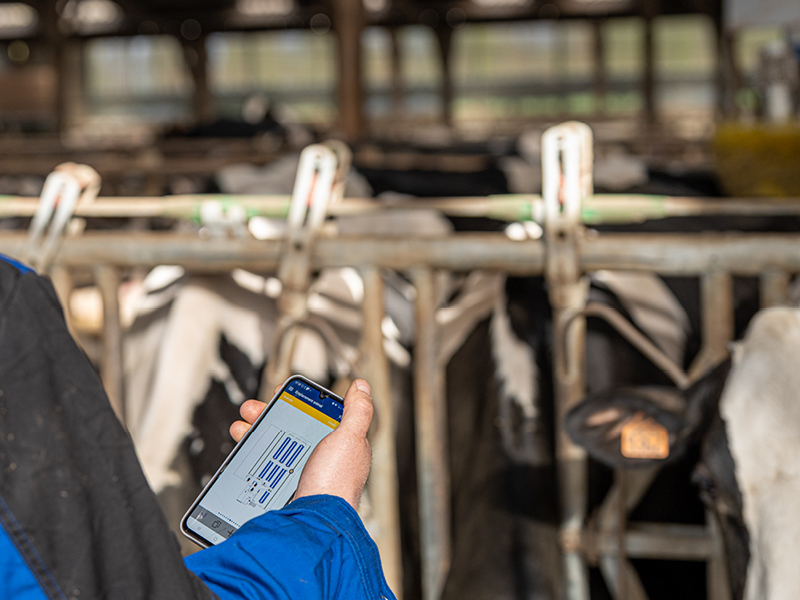
As farming becomes more digital, with tools such as sensors increasingly used to monitor milking, reproduction, behaviour and body condition, farmers need digital services to manage and interpret the growing volume of data – particularly as herd sizes increase. Digital services powered by artificial intelligence process vast amounts of data in real time, delivering actionable insights that help farmers make informed decisions and focus their attention on the cows that need it most.
Digitalisation also supports more sustainable dairy operations by improving resource use, profitability and traceability. To enable this transformation, a strong ecosystem of partners, advisors and technology specialists is essential to support farmers, improve business efficiency and build lasting partnerships that strengthen collaboration across the dairy value chain.
DELAVAL
DeLaval VMS™ Batch Milking is reshaping dairy operations
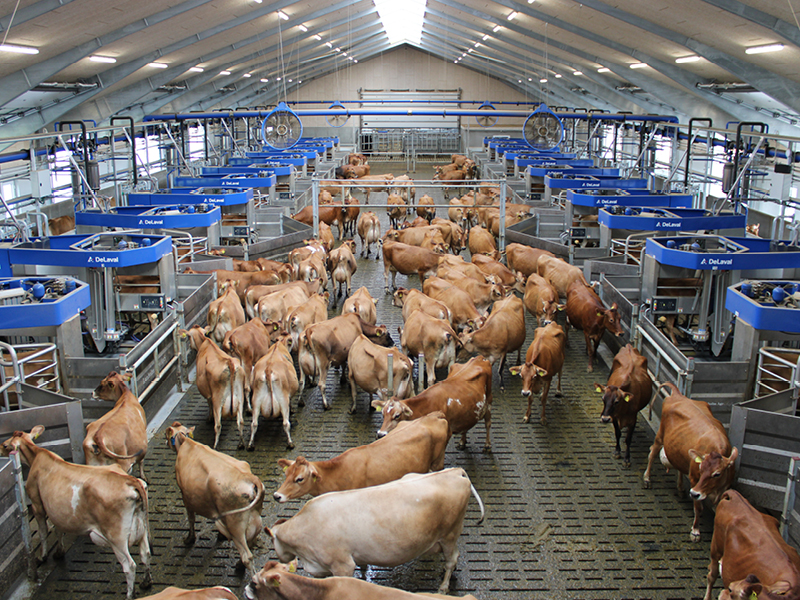
VMS Batch Milking is gaining popularity worldwide as dairy farmers look for new ways to manage larger herds. Designed for medium‑ to large‑scale operations – typically more than 300 cows – it helps address industry challenges such as labour shortages, rising costs and the growing need for flexibility and scalability.
Unlike a traditional VMS set‑up, where cows are milked autonomously, or a parlour or rotary system that relies on fixed schedules and manual labour, VMS Batch Milking allows farmers to benefit from automation while maintaining a structured milking routine – helping to improve cow comfort, milk quality, cow flow and both production and labour efficiency.