
 TETRA Laval SUSTAINABLE DEVELOPMENT
Dairy Hub project in Kenya raises milk productivity and household income
In Kenya, Tetra Pak and Tetra Laval Food for Development are collaborating with partners to help 30,000 farmers to increase dairy productivity and income through a Dairy Hub model. The project does not only aim to increase productivity but also increase milk collection and improve milk quality as well as engage women and youth throughout the dairy value chain. Since the project started in 2017, milk production has increased by 19 per cent and the average annual net household income has risen from US$201 to US$1,777.
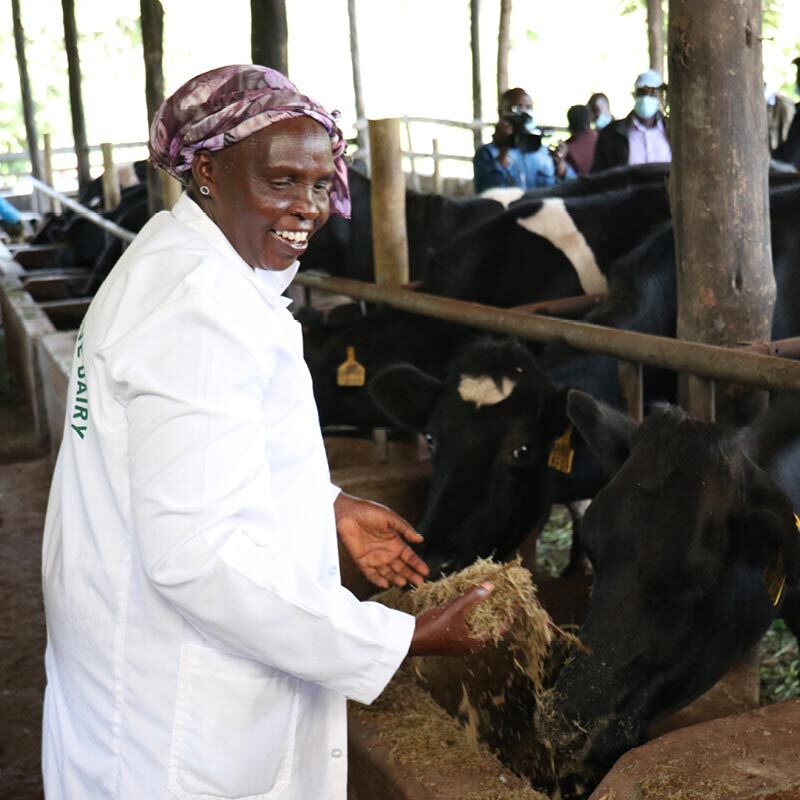
Madgeline Buigut is one of the 11 reference farmers. She has been working with dairy farming for more than a decade, but without seeing much profit. That has now changed, and her farm has grown significantly. Madgeline is also happy that more women are getting a chance to run farms and inspire others to follow in their footsteps.
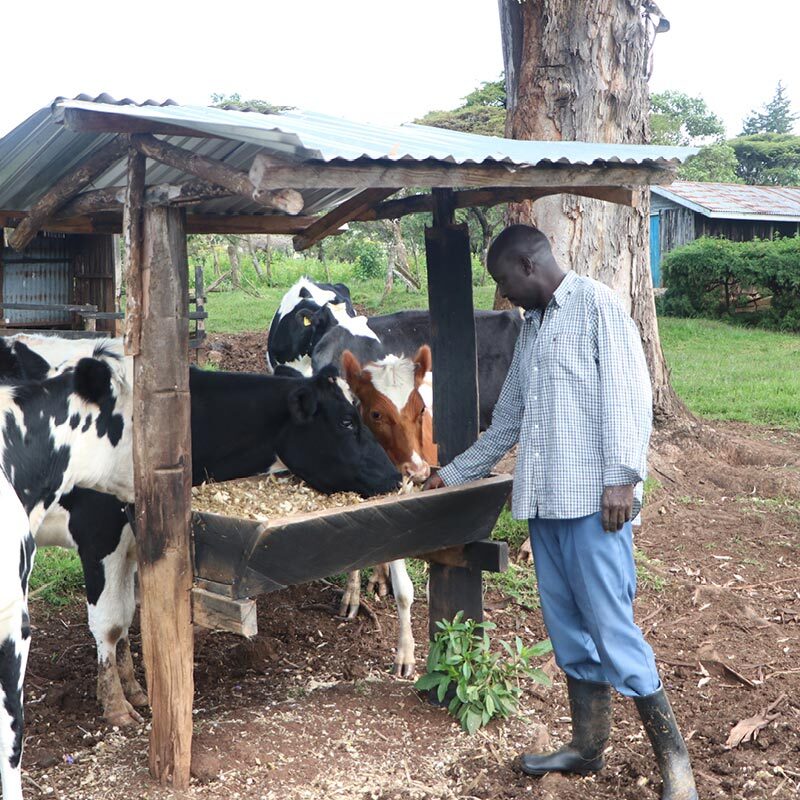
In Kenya, smallholder farmers are responsible for nearly 80 per cent of all milk produced but they have traditionally been challenged by a lack of infrastructure and experience, which threatens access to safe and nutritious food in the country. The Kenya Market-Led Dairy Value Chain Supply project (KEMDAP) was formed to help improve the situation and meet the growing demand for milk and dairy products. KEMDAP is a four-year project funded by the Swedish International Development Cooperation Agency (SIDA) and implemented by Heifer International.
Linking farmers to a dedicated dairy processor
Tetra Pak joined the KEMDAP project along with Tetra Laval Food for Development and their Dairy Hub model to link 30,000 smallholder farmers to a dedicated dairy processor – in this case New Kenya Cooperative Creameries. This helps enable stable access to market for the farmers and the safe distribution of UHT (ultra-high temperature) treated milk throughout Kenya. UHT milk is key to ensuring food security and safety in the country as the milk has an increased shelf life, meaning it can reach remote areas without a cold chain.
Reference farmers inspire others
“In the Tetra Laval Food for Development team, we work directly with Extension Officers, a team of local technicians, who are focused on providing extension services and knowledge to the smallholder farming community. We provide the them with technology and hands-on training, and they then cascade this knowledge down throughout the dairy value chain. In the KEMDAP project, we work with a reference farm methodology, working closely with 11 reference farmers carefully selected because they are people who are open to change and have the potential to inspire those around them,” explains Lynda McDonald, Project Manager, Dairy Development, Tetra Laval Food for Development.
It has not been an easy journey for the farmers and they have faced many challenges along the way. But strong support from the Extension Officers helped them to solve issues such as lack of clean fresh water, proper feed and nutrition, poor record keeping and a lack of proper farm management, resulting in increased production and profitability.
School Feeding Handbook provides unique insight into improving child health and education
Tetra Pak has been engaged in school feeding programmes since 1962 when Tetra Pak® packages were introduced in Mexico. Tetra Pak and Tetra Laval Food for Development have now introduced a School Feeding Handbook, which provides a unique insight into the many positive benefits that school feeding programmes bring to children and communities worldwide and how they have played a key role in improving health and education for school children. The handbook also gives many examples of best practice and impact data from various school feeding programmes.
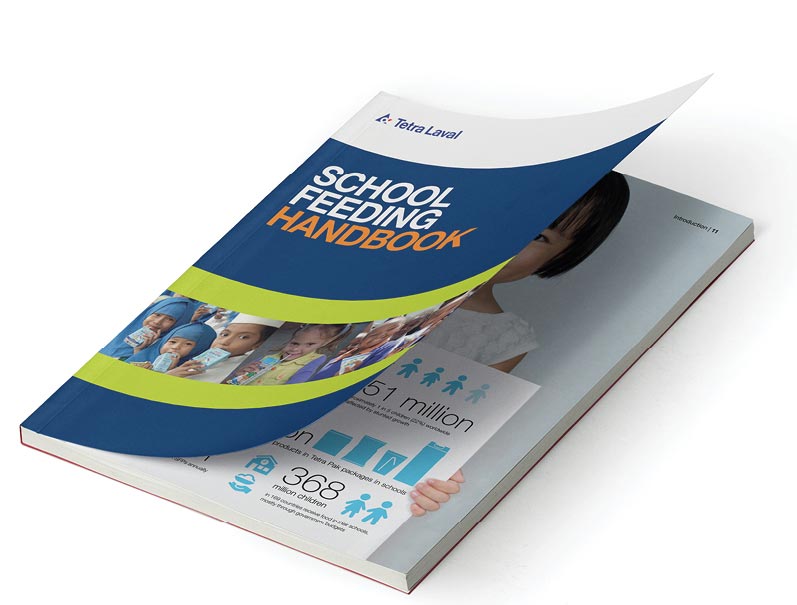
School feeding programmes are helping to tackle the challenges of malnutrition and food insecurity at a global level – to make a measurable difference to children’s lives. More than 68 million children in 56 countries now receive milk or other fortified beverages in Tetra Pak packages in schools. Both Tetra Pak and Tetra Laval Food for Development continue to play a significant role in the field, actively supporting customers and working in collaboration with governments, UN agencies, and NGOs.
“We regularly share global best practice and provide technical assistance in the evaluation and implementation of school feeding programmes, food safety and quality controls, product development, distribution, and environmental education activities in schools,” says Rafael Fabrega, Director, Tetra Laval Food for Development.
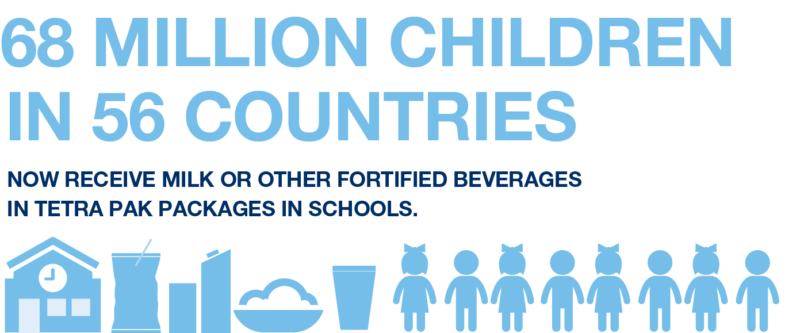
Source: World food programme (WFP)
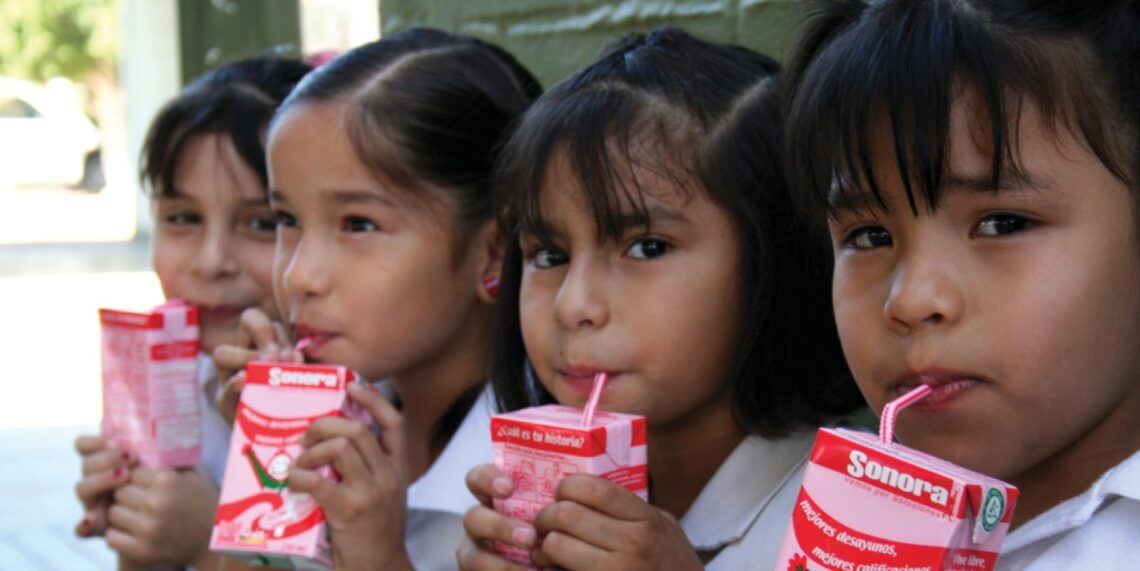
Over 6 million children benefit from school milk programme in Mexico
The school milk programme in Mexico is one of the longest running programmes of its kind in the world and has made a significant contribution to addressing challenges like malnutrition, education and food insecurity. Today, more than six million children benefit from school feeding in Mexico. Studies from the National Institute of Public Health have highlighted the positive impact of fortified milk consumed by children. During a 12-month period, benefits included a reduction in the presence of anaemia by 21.6 per cent, while iron deficiency decreased by 3.2 per cent.
As early as 1929, the school milk programme, “Drop of Milk Programme”, was founded not only to tackle child malnutrition, school attendance and food insecurity, but to also benefit local farmers and incentivise production. This link with local agriculture is important as more than 13 per cent of Mexico’s work force is employed in agriculture.
Tetra Classic® Aseptic – a practical solution to logistical challenges
Over the years, the implementation of legislation like the Child Protection Law and the National General Health Law have been essential in prioritising child nutrition and school feeding. As the programme grew in coverage throughout the country, the safe distribution of milk was challenged by various logistical and infrastructure factors, especially in remote areas where a viable cold chain did not exist. As a practical solution to overcome these distribution and food safety challenges, Tetra Classic® Aseptic 250 ml packages were introduced in 1962, marking the first school milk programme where Tetra Pak packages were used.
In 1977, the government created the National System for Integral Family Development (DIF). As one of its responsibilities, DIF manages the school feeding programme. According to DIF school feeding programme regulations, a serving of 250 ml of milk is mandated as a component of the breakfast programme for school children. In addition to the aseptic packages, Tetra Pak has also provided practical support.
Practical support to partners
“Through the programme, we’ve been able to offer our partners practical support in sharing global best practice in food safety and quality. We also share best practice in environmental education and recycling in schools as well as promoting nutritional awareness,” says Robert Graves, Managing Director, Tetra Pak Mexico.
Tetra Pak has been actively involved in supporting manufacturers that produce UHT (ultra-high temperature) milk for the programme and currently there are 14 Tetra Pak customers delivering milk and nutritious beverages to children in schools nationwide.
“Mexico is a flagship example of how demonstrating the importance of impact data, links with local agriculture and economic development, community engagement and policy implementation can play a vital role in the long-term sustainability of a school feeding programme,” explains Rafael Fabrega, Director, Tetra Laval Food for Development.