TETRA LAVAL THEME: SUSTAINABLE FOOD SYSTEMS
The necessity of transforming our food systems
Everyone deserves the right to have access to safe and nutritious food. Securing efficient food distribution has been the founding principle for Tetra Laval. Millions of people around the world suffer from hunger and malnutrition. Food systems in general are today inefficient, unbalanced and in some ways unsustainable. As these systems profoundly affect our health, environment, economies and cultures, transforming them can help create a more sustainable society – while contributing to the UN Sustainable Development Goals.
Multiple challenges for global food systems
More and more countries are experiencing the double burden of malnutrition, where one in nine people suffer from undernutrition while a third of people are obese or overweight1). Fighting hunger has been a world challenge for decades. But the situation has worsened due to Russia/Ukraine war and the pandemic with a widespread loss of incomes, threatening food security, health and nutrition2), and about 6903) million people are currently suffering from hunger.
The demand for food is expected to continue to grow because of both population growth and rising incomes, which puts additional pressure on food systems. By 2050, the global population is expected to reach 9.7 billion, increasing the demand for food4). Food systems are also vulnerable to disruptions from human conflicts and from climate change, i.e., farming and harvesting distruptions, water scarcity, soil erosion and drought resulting in lower food production.
In addition, global food systems, account for about a third5) of all greenhouse gas emissions. About a third6) of all food produced is also lost or wasted, mainly due to insufficient production practices, inadequate infrastructure, lack of packaging, short shelf life and unsustainable consumption practices.
The UN Food System actions areas
On 23 September, the UN convened a Food Systems Summit in New York as part of the Decade of Action to achieve the UN Sustainable Development Goals (SDGs) by 2030. An ambition of the summit was to propose new actions to deliver progress on the 17 SDGs, which are all related to some degree to healthier, more sustainable and equitable food systems.
There are five areas to accelerate action to deliver on Agenda 2030 through food systems:
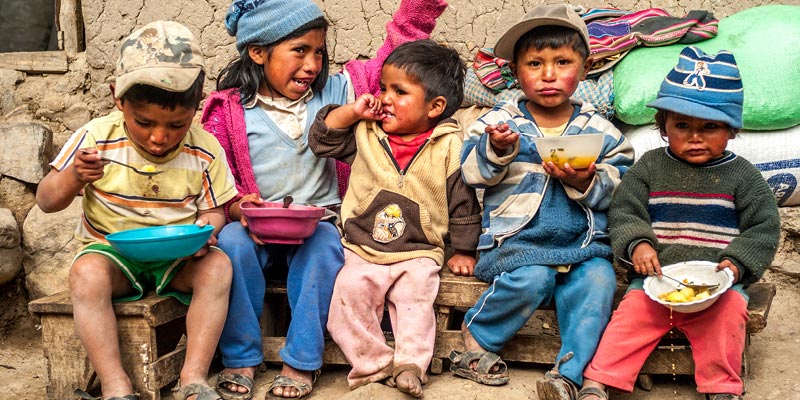
Nourish All People
To support work to end hunger and all forms of malnutrition and reduce the incidence of non-communicable disease.
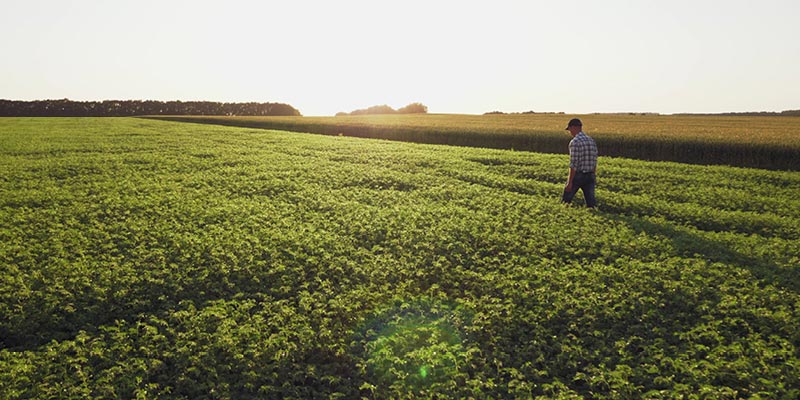
Boost Nature-Based Solutions of Production
To support work to optimise environmental resource use in food production, processing and distribution – to reduce biodiversity loss, pollution, water use, soil degradation and greenhouse gas emissions.
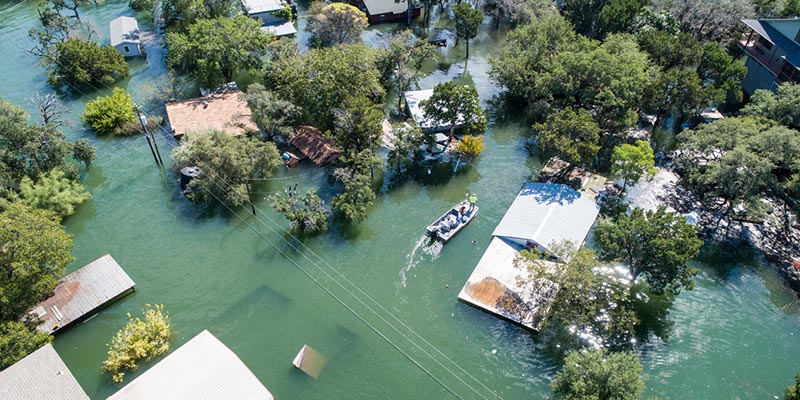
Build Resilience to Vulnerabilities, Shocks, and Stresses
To support work to ensure the continued functionality of sustainable food systems in areas that are prone to conflict or natural disasters.
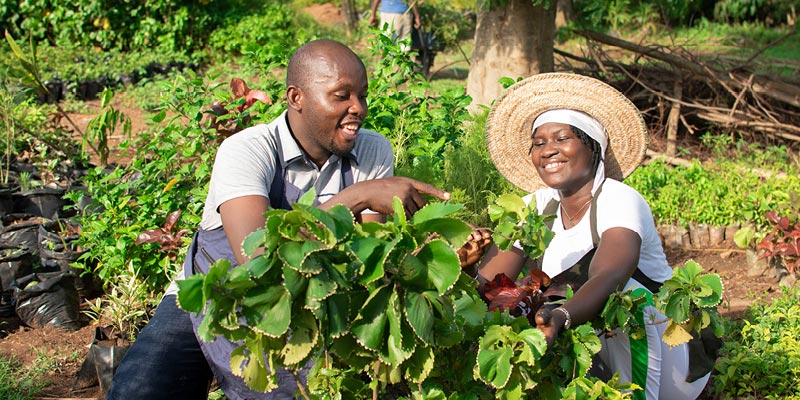
Advance Equitable Livelihoods, Decent Work, & Empowered Communities
To support work to eliminate poverty by promoting full and productive employment and decent work for all actors along the food value chain, enabling entrepreneurship and addressing the inequitable access to resources and the distribution of value.
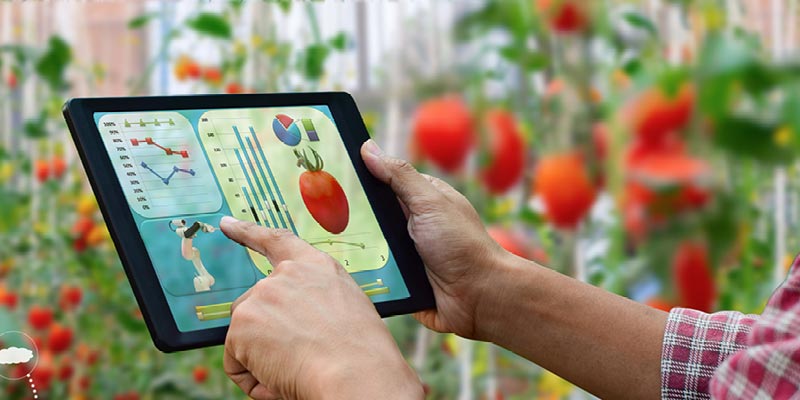
Means of Implementation
To help countries leading up to the UN Food Systems Summit connect to initiatives, and resources around finance, governance, science and knowledge, innovation, technology and data, capacity, and beyond.
The Tetra Laval Group has a strong commitment to contribute to the UN Sustainable Development Goals and the above-mentioned Action Areas. For instance, Tetra Pak has identified several impact opportunities that can help drive system change and support the UN initiative. These include food innovation for healthier food, school feeding programmes for improved nutrition, minimised food loss and waste through innovative food processing technologies and packaging solutions, and sustainable dairy farming.
School Feeding Programmes and local dairy hubs contribute to secure and sustainable food systems
There are several challenges that need to be overcome to fulfil the UN initiative on Sustainable Food Systems. The Tetra Laval Group contributes to providing access to safe nutrition in several ways. This includes playing an active role by working in collaboration with customers and other partners to develop School Feeding Programmes around the world and to increase the supply of locally produced high-quality milk through our Dairy Hub model.
Major challenges but also opportunities
Achieving global food security in a sustainable way is a complex task in a world faced with a growing population and an increasing demand for safe, nutritious food. Climate change, water scarcity, land use, urbanisation and supply chain disruptions add to these challenges. But there are also many opportunities for improvement.
One opportunity for food production is to increase yields and productivity in an environmentally sustainable way to meet the needs of a growing population. For example, in the dairy value chain alone, approximately 42 per cent (867 million tonnes) of the global milk production is produced by smallholder farmers and most of this milk is not formally processed or packaged. Meanwhile, the yields and income levels of smallholder farmers are very low and many lack access to formal markets. Improving production and infrastructure for milk present another related opportunity – a highly nutritious product like milk can play a key role in improving nutrition for children and communities in need today, as well as the growing global population in the long term.
Tetra Laval’s contribution to safe and nutritious food
The Tetra Laval Group is committed to creating more secure and sustainable food systems by increasing access to safe and nutritious food.
For example, throughout our history Tetra Pak’s food processing and packaging technology has played a key role in providing school children around the world with access to safe nutrition. School feeding programmes have proven to have a positive impact on children’s physical health and education by reducing malnutrition and improving school enrolment and attendance rates. They also play an important role in local agricultural development and job creation. Today, more than 68 million school children in 56 countries receive milk or other fortified beverages in Tetra Pak packages.
“Tetra Pak and Tetra Laval Food for Development support customers and collaborate with governments, NGOs, the UN and International Development Aid agencies in the development of school feeding programmes linked to local agricultural development,” says Rafael Fábrega, Director of Tetra Laval Food for Development.
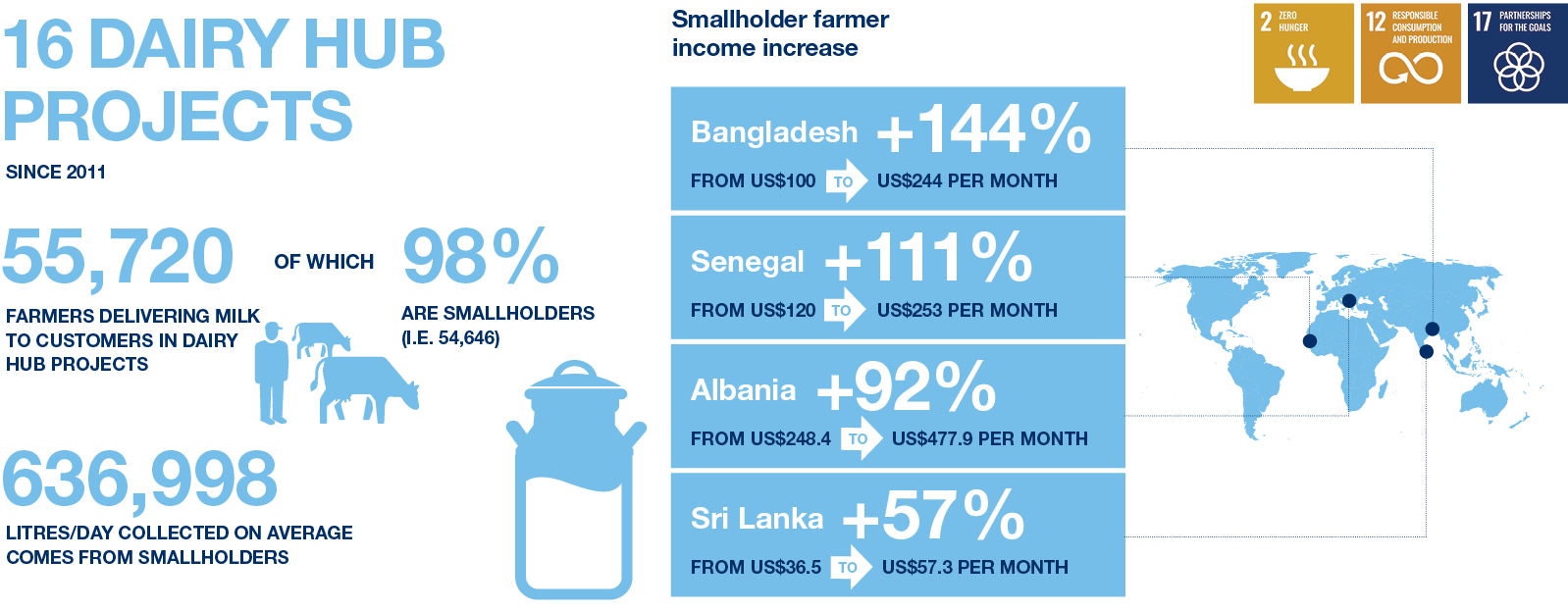
Tetra Laval Food for Development and DeLaval’s knowledge and expertise in dairy farming has also been vital in the development of the Dairy Hub model. The model links smallholder farmers to a dedicated dairy processor in a selected area and provides hands-on practical knowledge transfer. Providing farmers with training services and setting up appropriate cooling infrastructure and technology increases the supply of locally produced quality milk. Dairy Hubs have helped provide access to formal markets and improve the livelihoods of more than 54,000 smallholder farmers through 16 projects in various parts of the world.
“With the combination of technology, know-how, and expertise, we believe we can make a real difference by working together with customers and collaborating in partnership,” concludes Fábrega.